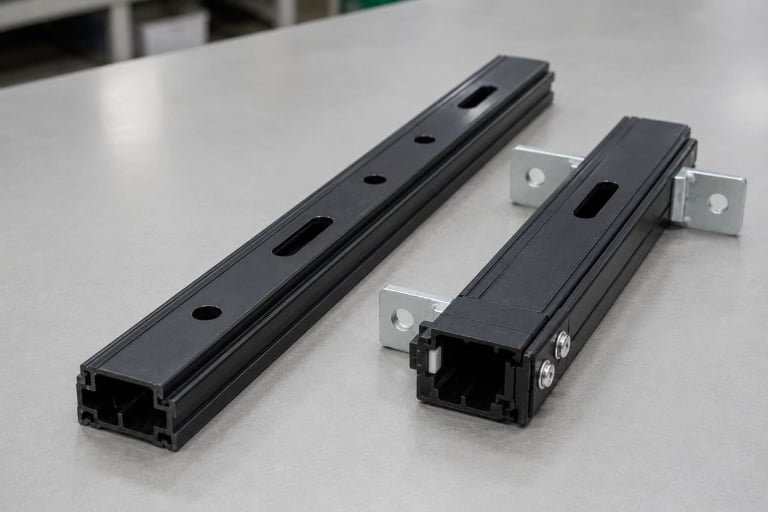
Cut-to-Length Extruded Profiles
Extruded and co-extruded profiles cut to specified lengths according to customer drawings or production requirements.
OKAWA provides secondary processing and assembly services for plastic extruded and co-extruded profiles, helping customers receive parts that are closer to their final production or assembly requirements. Depending on the project, we can integrate cutting, punching, protective film application, marking, printing, assembly and custom packaging after extrusion. By combining extrusion and downstream operations with one manufacturing partner, customers can simplify sourcing, reduce handling between suppliers and improve production consistency.
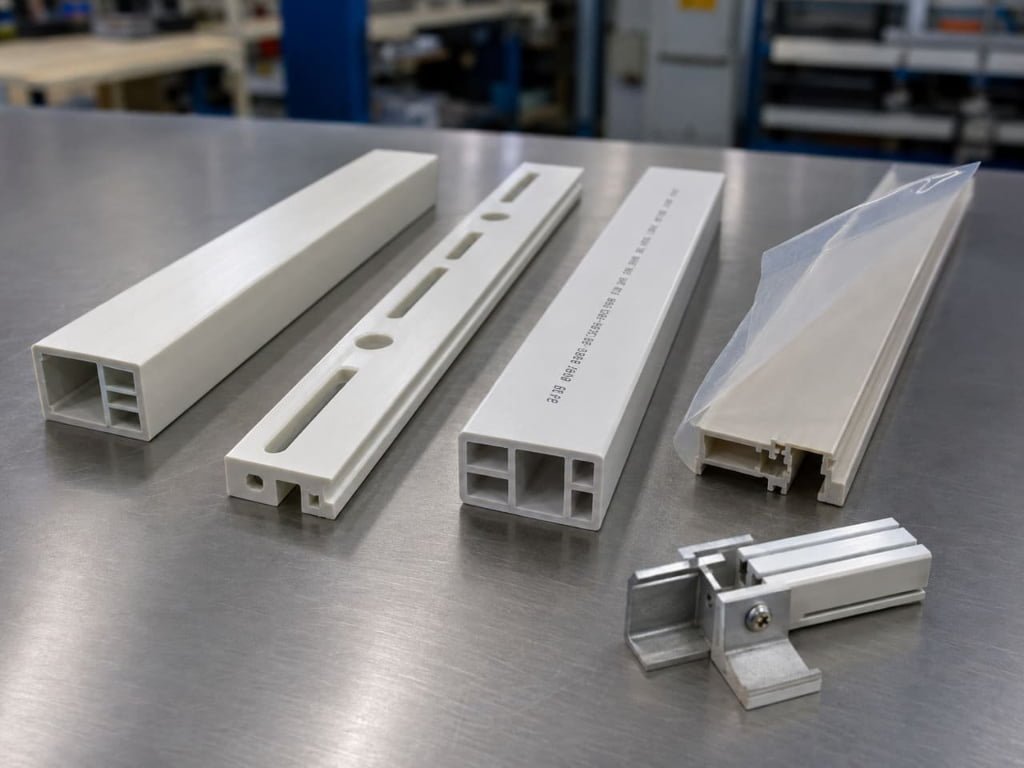
Applicable raw materials for this process
Where This Capability Delivers Value
Extruded and co-extruded profiles cut to specified lengths according to customer drawings or production requirements.
Secondary processing for holes, slots and other features required for installation, connection or assembly.
Printing and marking options for identification, branding, positioning or product information.
Protective film application for profiles requiring surface protection during processing, transportation or assembly.
Extruded parts supplied with required secondary operations completed for easier integration into customer assemblies.
Multiple parts can be assembled and packaged according to project requirements when a more complete component is required.
Why Our Process Stands Apart
Combine extrusion, secondary processing and assembly within one manufacturing workflow.
Reduce the need to transfer extruded parts between multiple suppliers for downstream processing.
Coordinate extrusion dimensions and downstream operations within the same production process.
Secondary operations can be configured according to drawings, assembly requirements and final application needs.
Deliver processed parts or assemblies closer to the customer's final installation and production requirements.
Step-by-Step Production Sequence
A structured, repeatable production process ensures consistent dimensional accuracy and surface quality across every batch.
Review drawings, dimensions, tolerances, processing features and final assembly requirements.
Coordinate profile dimensions and extrusion requirements with subsequent processing operations.
Perform required cutting, punching, marking, printing, film application or other specified operations.
Assemble processed profiles with related components when required by the project.
Inspect key dimensions, processing features, appearance and assembly requirements before delivery.
Package finished parts or assemblies according to product protection and shipment requirements.
Finish-to-Ship Post-Processing Services
Streamline your supply chain -- we deliver fully finished parts ready for direct assembly or shipment.
Technical Factors to Evaluate
Hole positions, slots, cut lengths and other processing features should be defined according to drawings and assembly requirements.
Critical dimensions and processing tolerances should be identified during project evaluation.
Profile design and extrusion tolerances should be considered together with downstream processing requirements.
Mating parts, connection methods and final assembly conditions should be evaluated before production.
Surface protection, part orientation and transportation requirements can be considered when defining the final packaging method.
Real Projects. Proven Outcomes.
Submit your drawings, samples or design concepts -- our engineering team will provide a detailed manufacturability assessment and tailored production proposal.