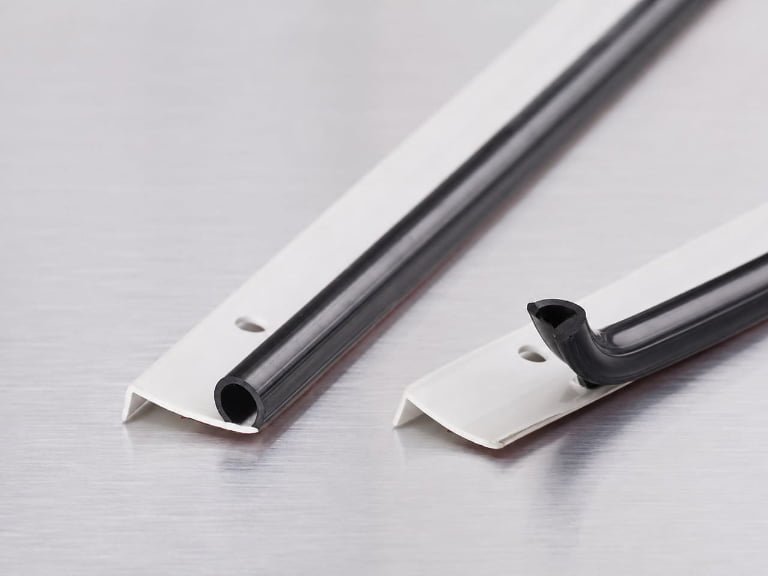
Rigid-Soft Composite Profiles
Profiles combining rigid structural sections with flexible sealing, cushioning or contact areas in a single component.
OKAWA provides multi-material co-extrusion manufacturing for profiles that require different materials, colors or functional properties within a single structure. Our capabilities include rigid-soft co-extrusion, dual-color co-extrusion and magnetic-plastic co-extrusion. Based on customer drawings, samples and application requirements, we evaluate material combinations, profile structures and manufacturing feasibility, supporting projects from tooling and sampling through stable mass production.
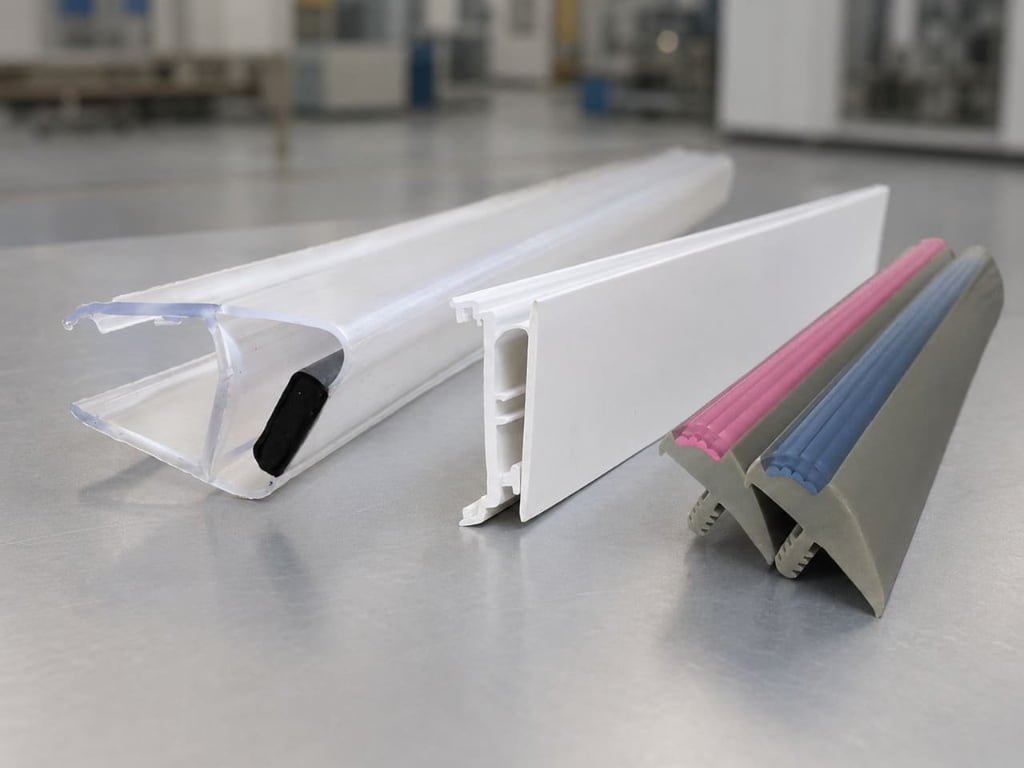
Applicable raw materials for this process
Where This Capability Delivers Value
Profiles combining rigid structural sections with flexible sealing, cushioning or contact areas in a single component.
Integrated profiles for applications requiring both structural support and flexible sealing or cushioning functions.
Co-extruded profiles combining different colors or visual zones within one continuous profile.
Profiles combining different material properties or functional zones within a single cross-section.
Plastic profiles integrating magnetic elements for positioning, attachment or other application-specific functions.
Application-specific co-extruded profiles developed according to customer drawings, samples and functional requirements.
Why Our Process Stands Apart
Combine different materials or functional elements within a single continuous profile.
Integrate structural, sealing, cushioning, visual or magnetic functions into one profile where applicable.
Co-extruded structures can reduce separate parts and downstream assembly operations.
Profile geometry and material distribution can be developed according to customer drawings and functional requirements.
Support tooling, sampling, process validation and stable mass production for application-specific co-extruded profiles.
Step-by-Step Production Sequence
A structured, repeatable production process ensures consistent dimensional accuracy and surface quality across every batch.
Review customer drawings, samples, functional requirements, dimensions and application conditions.
Evaluate material combinations, profile geometry, functional zones and co-extrusion feasibility.
Develop co-extrusion tooling according to the confirmed profile and material structure.
Produce initial samples and establish suitable co-extrusion process parameters.
Evaluate dimensions, appearance, material distribution and required functional characteristics.
Establish controlled process parameters for stable and repeatable co-extrusion production.
Complete required cutting, punching, printing, assembly, inspection and packaging before shipment.
Finish-to-Ship Post-Processing Services
Streamline your supply chain -- we deliver fully finished parts ready for direct assembly or shipment.
Technical Factors to Evaluate
Materials used in the same co-extruded profile should be evaluated for processing compatibility and required functional performance.
The position and geometry of each material should be considered during cross-section development.
Where bonding between materials is required, material compatibility and interface design should be evaluated during development.
Wall thickness, transitions and functional zones should be designed with co-extrusion stability in mind.
Sealing, cushioning, appearance, magnetic or other functional requirements should be identified before tooling development.
Real Projects. Proven Outcomes.
Submit your drawings, samples or design concepts -- our engineering team will provide a detailed manufacturability assessment and tailored production proposal.